
The liquid foundation. Our clear chicken, cloudy pork and mushroom-kombu examples create different textures.
Shoyu Ramen02 / BEHIND THE BOWL
Depth lives
in the details.
Broth, seasoning, noodles, finish. Four elements coming together. A look at Daruma’s culinary idea, without an invented kitchen history.
Fictional restaurant · Design concept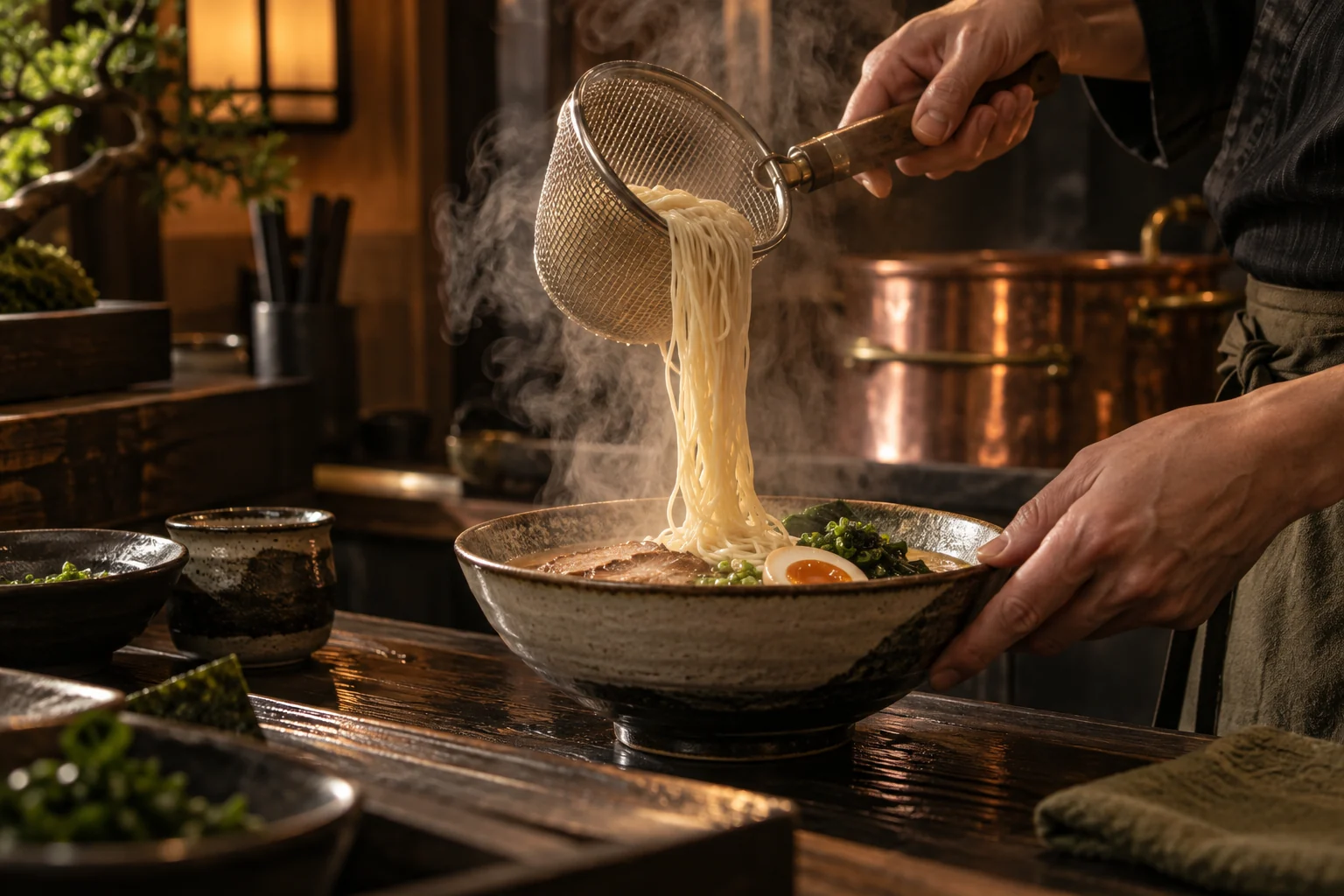
02 / The tasting atlas
A bowl, in four parts
An ingredient diagram, not a customization menu. Real recipes differ by kitchen and region.
An ingredient diagram, not a customization menu. Real recipes differ by kitchen and region.
A concentrated seasoning added to the bowl. Soy sauce or miso may shape its flavour; tare is not the same thing as broth.
Sapporo MisoCooked separately and brought to the broth near serving. Shape and thickness change the experience.
Hakata TonkotsuToppings, aromatic oils and garnishes bring contrast. Each dish page names this house’s illustrative combination.
Shiitake & KombuBroth, noodles, toppings
01 · Broth: the beginning
A clear broth can taste clear. A rich broth can have body. The different bowls on our menu show that ramen does not belong to a single texture. Mushrooms and kombu open a plant-based direction with a character of its own.
02 · Tare: the accent
Tare is the concentrated seasoning that helps define a bowl. Our Shoyu idea uses soy sauce; Sapporo Miso puts miso at the centre. Seasoning does not replace broth. They work together, each with a distinct role.
03 · Noodles: the moment
Our menu distinguishes wavy noodles in the miso bowl from thin straight noodles in tonkotsu. Noodles cook separately and meet the broth just before eating. This describes the preparation concept, not a claim about an existing noodle workshop.
04 · Finish: the final gesture
Chashu, egg, nori, sweetcorn, wood-ear mushrooms and tofu each bring a different accent. A finish need not show everything at once. In Daruma’s bowls, individual ingredients should remain recognizable and complement the broth.
A small kitchen vocabulary
Culinary context, not a guarantee of this concept’s recipes. Follow the terms back to the bowls.
- Broth
The soup base; its ingredients and cooking method influence texture. Clear does not mean vegetarian.
- Tare
Concentrated seasoning, often added separately from the broth. Ingredients vary.
- Wheat noodles & wrappers
Our noodles and dumpling wrappers are wheat-based examples. Egg content differs by recipe.
- Chashu
Prepared pork used as a ramen topping in these example bowls; not a plant-based ingredient.
- Miso
Fermented seasoning commonly made with soybeans. A miso broth can still contain meat or fish.
- Kombu
Edible kelp used to build savoury depth. Other dashi recipes may also use fish.
- Shiitake
Mushrooms with an earthy, savoury character, paired here with kombu.
- Nori & aonori
Nori sheets and aonori flakes are distinct seaweed ingredients. They are not interchangeable recipe claims.
- Ginger
Fresh ginger in dumplings and pickled ginger on tonkotsu are different preparations.
- Bonito flakes
Dried fish flakes. Their presence means the okonomiyaki example is not vegetarian.
Editorial edition · 8 October 2026 · JNTO · Ramen · JNTO · Vegetarian guide
Illustrative ingredients and allergens only. Plant-based does not mean allergen-free. A real kitchen must confirm recipes, suppliers and cross-contact.
Inspiration & sources
Our interpretation is original. These sources informed the culinary structure.
Kikkoman · DashiIppudo · Broth & noodlesIchiran · Ramen craftKeep exploring
The menu
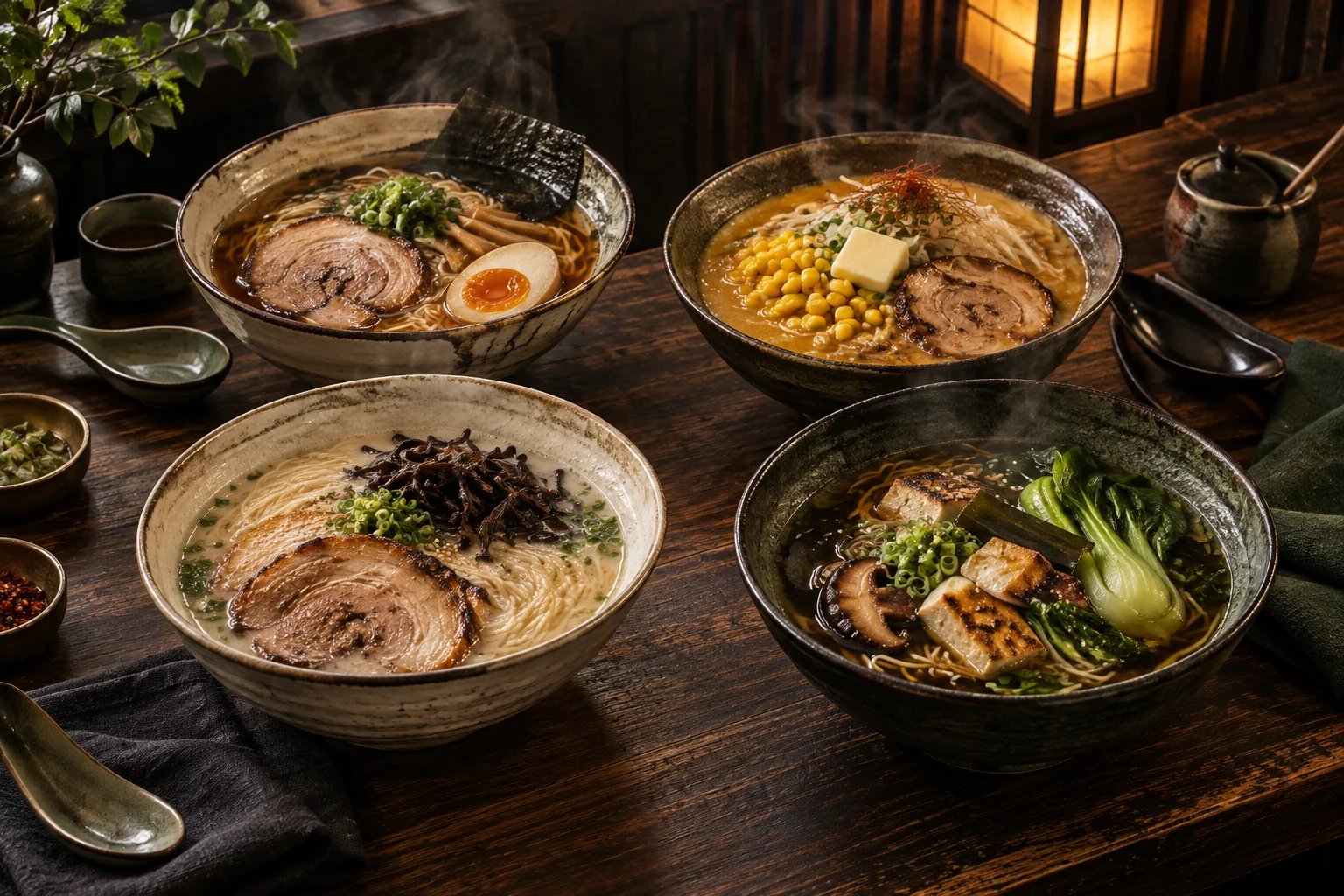
Four ramen bowls, three small plates and more than one way to begin. Explore the broths, noodles and small details that give each bowl its character.
Gather around
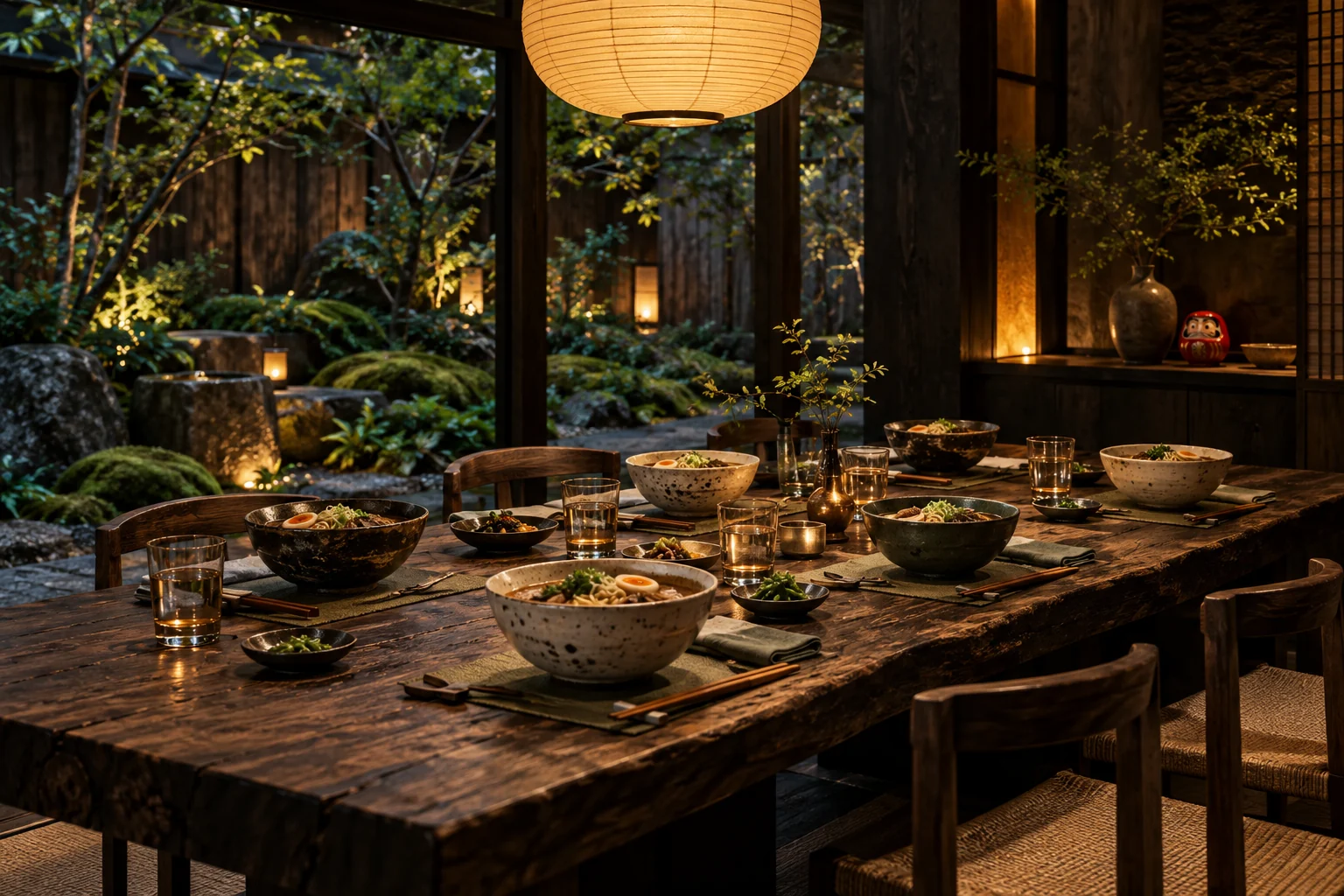
A quiet birthday, a reunion, a small team evening. Our idea of hospitality starts at the shared table: space for bowls, small plates and a conversation that finds its own pace.
Visit & questions
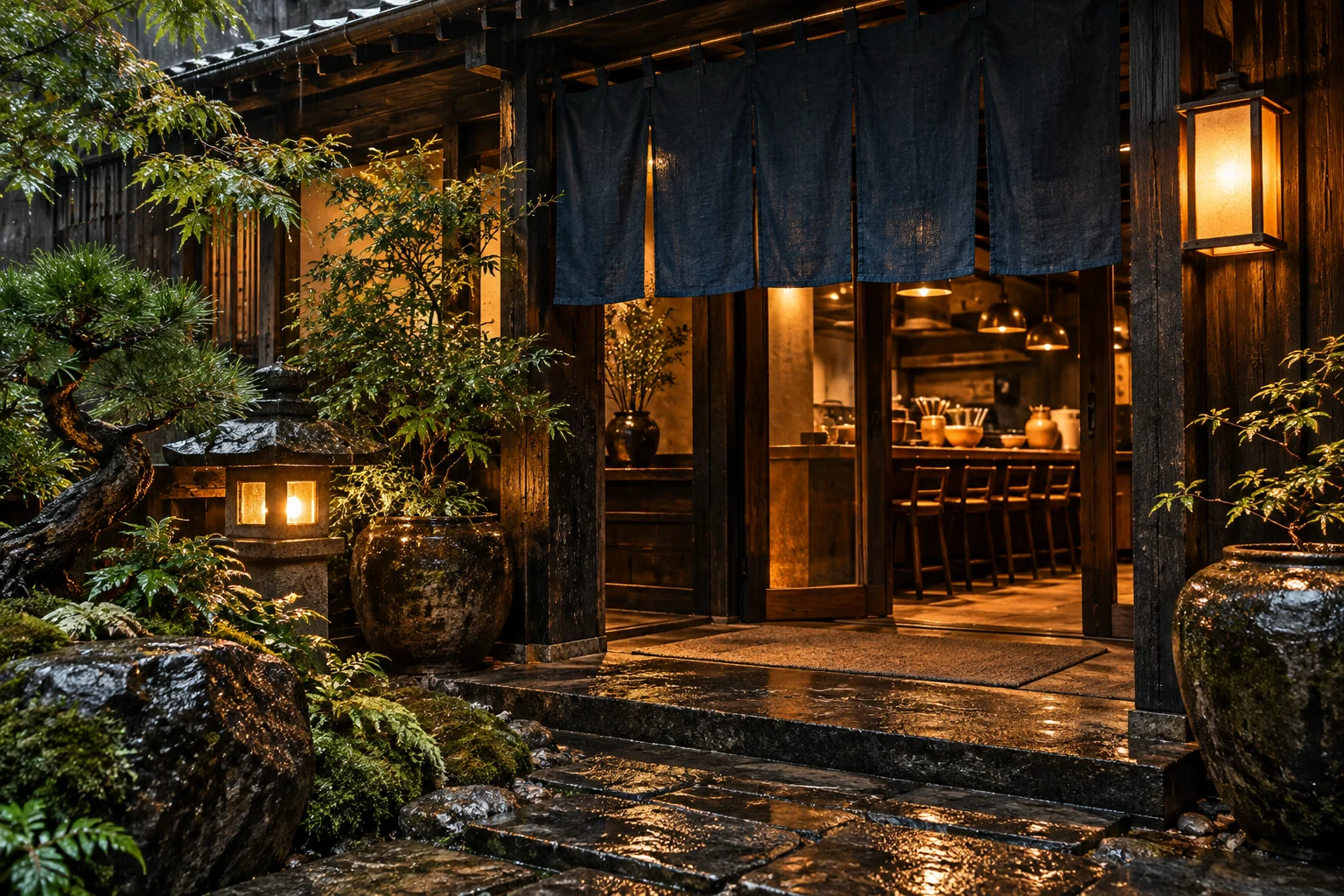
A helpful restaurant site answers practical questions before the journey. Daruma is imagined: this page shows how clear visiting information and an honest demo can fit together.